Daredevil Villains #73: Project Reptile
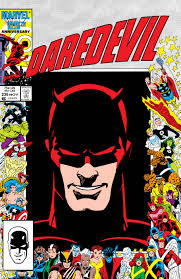 DAREDEVIL #236 (November 1986)
“American Dreamer”
Writer: Ann Nocenti
Penciller, co-inker: Barry Windsor-Smith
Co-inker: Bob Wiacek
Colourist: Max Scheele
Letterer: Joe Rosen
Editor: Ralph Macchio
“Born Again” completely upended the series. By the end, Matt has lost his licence to practice law and started a new life in Hell’s Kitchen as a diner chef, happily reunited with Karen Page for a fresh start. Oh, and the star name creators from “Born Again” have left. So how do you follow that?
Well, this is Daredevil, so the short-term answer is “with fill-in stories”. The first two don’t concern us. Issue #234, by the improbable creative team of Mark Gruenwald, Steve Ditko and Klaus Janson, features Madcap (from Captain America) and the Rose (from Amazing Spider-Man). Issue #235 is a Mr Hyde story by Danny Fingeroth, Steve Ditko and Danny Bulandi. Both acknowledge the new status quo, but don’t really attempt to do anything with it.
That brings us to issue #236, by the book’s new regular writer Ann Nocenti and guest artist Barry Windsor-Smith. Nocenti was the editor of Uncanny X-Men and New Mutants at this point, and would remain so for another couple of years. As well as various fill-ins and anthology contributions, she’d written the final four issues of Spider-Woman, the Dazzler/Beast miniseries Beauty and the Beast and one of her signature works, the Longshot miniseries. Daredevil was her first substantial run on an ongoing title, and turned out to be by far her longest run on any book.
But she wasn’t the regular writer yet. Issue #236 was supposed to be a third fill-in issue, after which Steve Englehart would take over. Instead, he wrote just issue #237 – under the “John Harkness” pen name that he used when he wanted to take his name off something – and then Nocenti took over for real with issue #238. Englehart’s plan was for Daredevil to make a fresh start in California and join the West Coast Avengers, and the Black Widow was going to rejoin the supporting cast. Englehart’s version of events is that Nocenti’s fill-in story clashed with his plans by bringing back the Widow in a different way, and when Marvel refused to have it changed, he quit. So Nocenti became the regular writer instead, and instead of going back to California, she doubled down on the new Hell’s Kitchen setting.
That’s for the future, though. Her first issue, being a fill-in, doesn’t really engage with the new status quo.
Even so, there is no mistaking an Ann Nocenti comic. She’s a writer of ideas and arguments, and tends to write stories in which characters draw attention to the themes in ways that are simultaneously explicit and elliptical. For example, issue #236 opens with a government scientist giving a briefing to Black Widow. One main purpose of this scene is to explain the plot. A government super soldier project suppresses the memories and emotions of their agents to make them more effective. Agent Jack Hazzard’s suppressed personality has started to re-emerge, which is driving him mad. Hazzard is hallucinating and dangerous, and Black Widow’s mission is to kill him before he kills someone else.
Another main purpose is to make clear that the doctor is oblivious to how creepy the whole thing is. Even as he’s explaining how it went wrong with Hazzard, he’s trying to sell Natasha on signing up for the same treatment herself.
None of this is especially complicated. But here’s the doctor’s opening speech – the first line of dialogue in the first scene in the first Ann Nocenti issue:
…the brain is the blind spot between the eyes. This gray sponge buzzes with the white noise of synapses, which most humans mistake for the sound of themselves thinking. The heart beats on doors it should never open. We simply disconnect it. Psychologically, of course. Somewhere inbetween [sic], they say there rests the elusive soul. I have yet to locate one. Perhaps it is really located below the belt. The only thing we leave intact are those vitals that women call beastly and men call their guts. Anyway, the rest is just a twisting mass of nerves, muscles and bones – all working off the violent sparks of the brain. Man flails about in this sea of impulses, memories, phobias… and is ultimately rendered impotent. I take the reins in my fists and twist them into a coil that I can direct as I please.
Obviously, your tolerance for this sort of thing may vary, and the scientist is meant to be bizarrely pleased with himself. Also, in amongst this flurry of thematic discussion, the briefing loses sight of a major plot point: Hazzard has the power to stop people’s hearts, which is why he might kill people during his hallucinations. But you can’t you can’t say it sounds like anything else in Marvel’s superhero line in 1986.
Hazzard’s tailspin was triggered by seeing Daredevil’s fight with Nuke. Having gone through similar procedures, Hazzard is naturally alarmed to see Nuke’s mental state. But Nuke was a deliberately one-note character and a pure symbol. Hazzard is normal by comparison. He loves his country. He loves his mom. But he’s also alarmed at what he’s become, feels unable to return to a normal life, and resents the ordinary people who have no respect for his sacrifices. He lashes out at people who make him angry, but he regrets it and seems to be making a genuine effort to exercise self-control despite his disturbed state. He’s a danger to those around him because of his instant-kill power and his mental instability, but he doesn’t seem so bad.
Hazzard is also a Vietnam veteran who joined the secret service instead of returning to civilian life. All this stuff about the government suppressing his emotions seems to be a literal version of the trauma of his career. The story takes place on the Fourth of July, by the way, for added patriotic irony. Hazzard’s elderly mother is delighted to see him back, and she’s looking after a boy called Tommy, who idolises Hazzard. So Hazzard gives Tommy a rambling speech about patriotism and America, and gets Tommy to point a loaded gun at him. He seems to be trying to revert to normal civilian behaviour without having a clear idea of how to do so.
Black Widow enlists Daredevil to help with Hazzard, because she secretly hopes that Daredevil’s demonic iconography will trigger Hazzard’s religious beliefs and freak him out. After she stops Hazzard from killing Daredevil with his heart-stopping power, Hazzard asks her to kill him. Then he produces a home insurance advert, which he apparently believes to be a photograph of his wife and child. Finally, he grabs the Widow’s hand and forces her to shoot him in the head. And the story ends with the Fourth of July fireworks and Tommy playing patriotically with the loaded gun that Hazzard left him. Ann Nocenti likes a metaphor.
In principle, Hazzard is Nuke played as a character rather than a symbol, albeit presented in a very fractured way. Windsor-Smith draws him as a fairly normal looking soldier and he comes across as a broadly sympathetic figure. He knows he’s a danger to those around him and ultimately he chooses to die before he hurts someone else. But instead of a coherent personality, we get a mass of conflicting impulses which shift almost from panel to panel. You could say this is a Picasso-esque approach to conveying Hazzard’s personality; you might also see it as making Hazzard as abstract as Nuke, just in a different way. At root, Hazzard is simply a good soldier who’s devoted his life to his country in perfect good faith, only to be ruined and cast aside by the authority figures who exploited him.
Nocenti returns to this plotline in issue #247. That issue implies that Hazzard actually survived being shot in the head (though he never appears again), but focusses on an “Agent Crock”. Crock has escaped Project Reptile with wires still stuck in his head that allow him to relive certain memories by jiggling them a bit. Much of the story involves Black Widow being traumatised at having killed Hazzard and being psychologically unable to fight Crock until the last minute, all of which reads very oddly for any modern interpretation of the Widow.
These stories seem to set up a showdown with Project Reptile in due course, but in fact the plot seems to be dropped. Nocenti seems more interested in making points about how the personality is formed by memory – and how the Widow herself might have suffered similar trauma in a less literal way – than in the mechanics of Project Reptile itself. The obvious irony is that the doctor seems to have the same lack of emotion as his victims, and might even have been through the same process himself, making it a vicious cycle. From a plot perspective, though, the main problem with Project Reptile as recurring villains is that we never see it actually work. As best we can tell, all it’s ever achieved is to give some people major psychological problems and lose control of them. The key idea of a “reptilian” agent being effective at, well, anything, is never borne out on the page.
Perhaps that’s the idea – it’s not just an attempt at exploitation but an exercise in utter futility. But it feels more like a story that jumped straight to the final act where it all goes wrong. There’s certainly something in the idea of a government project trying to do by surgical mutilation what would otherwise be done by command structures and by trauma, but it feels like Nocenti finishes saying what she wants to say about those themes in two issues of set-up and leaves it at that.

I never was able to get into Nocenti’s run–I kept seeing it as a series of position papers in the shape of characters instead of actual characters.
That being said, I have great fondness for Bullet…but you’ll get to ‘Andy Sipowicz with super powers and a nuclear apocalypse obsessed son’ soon enough.
“And the story ends with the Fourth of July fireworks and Tommy playing patriotically with the loaded gun that Hazzard left him. Ann Nocenti likes a metaphor.”
Just a beautiful use of understatement, sir. Bravo.
@Thomas Deja – I felt similarly about Nocenti’s run. Felt like I was reading somebody’s homework.
I did not know that about Englehart’s intended direction. Sounds a lot like what Waid eventually did, when he had Matt disbarred after the Sons of the Serpent story.
I think with Englehart, it was a dodged bullet, because the Nocenti run is the single strongest run on the character by any writer to date. I’m glad the themes of Born Again were further interrogated instead of (what sounds like would have been) being pushed aside for a return to the 1970s.
Reusable villains were not really Nocenti’s strongest suit, though. She did introduce some real perennials – Typhoid Mary, Bushwacker, Blackheart – but mostly she likes to treat characters as flawed human beings, often in bad situations with no good options. There’s not really a good way to use Hazzard again, his story’s done.
Another great thing about the Nocenti run: no ninjas.
My sense after reading an Ann Nocenti comic is generally polite bafflement. Sometimes I think they’re probably really clever but beyond me, other times I think “No, I’m pretty sure this simply doesn’t make any sense, but maybe it’s still just me.” (I was so relieved when Al said on Twitter that her Green Arrow run wasn’t clicking for him either.)
I agree with everything Skippy had to say about Nocenti’s run. What I will add is that while Englehart’s sole issue wasn’t bad in isolation, Englehart wasn’t exactly at a strong point in his career around this point. His run on FF was terrible. I have time for his West Coast Avengers run because of all the nods to obscure continuity, but the writing was very Silver Age-esque (I still cringe every time I think of “Master Panda Bear” being used over and over as a put down), and comparing Englehart’s WCA with his work on the Avengers in the 1970s is night and day. His Silver Surfer was pretty good, but you could argue that it fit better with Englehart’s style in the ‘80s due to characterization not being as important with a book like the Surfer (which is more about big ideas), unlike what would have been necessary with DD.
The other thing is that I’ve heard that writers did not want to take over DD after Miller for fear of having their run constantly compared to Miller’s (which I have heard as an alternate excuse for why Englehart quit after one issue with him making up an excuse). I think that Englehart’s run would have forever been under the shadow of the Miller work, and if his run on FF is any indication, it wouldn’t have held up well to the comparisons. Nocenti created such an idiosyncratic and unique style on DD that her run was able to forge a new path for the character after Miller.
Additionally, I had forgotten why Englehart said he quit the title. I remembered him saying that Nocenti ruined his plans for Karen Page, not Black Widow. Either way, I find it a suspect reason. He could have easily continued with his plans for DD and BW after this issue.
I suppose that if you have to follow “Born Again”, there is hardly any real alternative besides Ann Nocenti.
And this story, despite not being to my tastes at all, is indeed just about perfect as a follow-up to “Born Again”, although that is faint praise at best.
The root problem is that both stories are so deeply nihilistic and have nothing resembling a hero, let alone a superhero. I failed to even consider that we were supposed to find Hazzard sympathetic or tragic instead of just pathetic. Widow and Daredevil are even more pathetic, in that they are aware of the problems and pretty much resign themselves to the role of disposable cannon fodder doing damage control for people that they know they can’t trust at all. This could easily be a Sin City guest writer story.
Were these subject matters to be treated in a superhero story that took itself sufficiently seriously, we would end up with something a bit closer to the typical Nocenti DD story, where at least sometimes we had some acknowledgement of how terrible it all was and which prices were being paid. Still very nihilistic, but there were often plot and direction.
It has been 40 years, and I still can’t decide whether I like Nocenti’s writing or not. She is the Jim Lee of writing: there is obvious talent there, but it just won’t come right to the page.
I did not realise harkness had been credited so many years before the ff run ended is disaster. Englehart would shortly add moon knight to the WCA would he would be a good cut and paste for Daredevil
@Chris V -Englehart’s run on West Coast Avengers was mixed. ( I didn’t mind “Master Panda Bear”- it was a nickname the heroes gave the villain.) On the one hand, Englehart’s characterization of Hank Pym is some of the finest characterization Pym has ever had. On the other hand, Tigra melting before anything in pants was just creepy. Englehart defended it on the grounds that both Roy Thomas and Jim Shooter wrote her more flirtatious as Tigra than previous writers. But (a) it was just creepy considering that this was portrayed as the result of magic and not Tigra’s own decisions and (b) it pretty much ruined Tigra as a serious hero until Avengers Academy.
Englehart’s other 80s work is similarly good at points but flawed at points. The Vision and Scarlet Witch series had Wanda become pregnant with twins. But it was marred by Crystal cheating on Quicksilver and Quicksilver becoming a villain in response. Crystal’s and Pietro’s wedding was a way by Roy Thomas to write out both characters, so it was definitely a mistake. But having Crystal cheat on Pietro and Pietro go mad just damaged both characters in ways it took years to recover from. Kurt Busiek has defended Englehart by claiming that Pietro going mad was an editiorial imposition and Engelhart had nothing against Pietro but considering that Englehart continued the plot of “Mad Pietro” over multiple editors-in-chiefs and multiple editors, it seems like Englehart must have liked the idea.
Then there’s his Green Lantern series. His Green Lantern series is considered one of the best pre-Geoff Johns- it created the definitive interpretation of Guy Gardner’s characterization and the romance between John Stewart and Katma-Tui was a high point for bothy of them. And he created Kilowog. But his run is marred by the creepy romance between Hal and Arisia.
Plus, his turning Carol Ferris into Star Sapphire as a permanent villain damaged the character badly. I realize that Carol Ferris’s Star Sapphire identity was Broome’s idea. Plus, Len Wein had badly damaged Carol’s character by having her demand that Hal quit as Green Lantern after Hal chose to rescue an exploding planet instead of fighting yellow-garbed villains who were attacking Ferris- yes, her friend was injured in the attack but Hal’s decision was so obviously correct that Carol just looked nuts. Plus, Wein screwed up by having Carol and John Stewart fail to recognize each other and there was no obvious way to explain that without turning Carol into Star Sapphire again.
That being said, turning Carol into Star Sapphire damaged Carol long-term. And Arisia licking Carol’s boots under mind control was just disgusting.
(And I still think that sciencells is a stupid name for the Green Lantern Corps’s prison cells. They’re cells that use science to imprison people- how does that make them different than normal prison cells? Does Zatanna use magicells to imprison her foes?)
Regarding his claim that he quit because of Nocenti’s story with the Black Widow clashing with his preferred usage of her, something similar happened with David Michelinie’s and Bob Layton’s second run on Iron Man around the same time. When Dave and Bob returned, in Iron Man 215-216, they revealed that Tony’s love interest, Cly Erwin, had been working for AIM since issue 205 because she blamed Tony for her brother’s death. The problem was that Danny Fingeroth had written a fill-in story in issue 212-213 and it’s very difficult to reconcile Cly’s behavior in those issue with her secretly working for AIM. (Fingeroth’s story was more in line with how Cly had been characterized before issue 215 than Dave and Bob’s was.) And as a result, when issue 215-216 came out, Dave and Bob were criticized for butchering Cly’s characterization. So I can see why Englehart might not have wanted to try to ignore Nocenti’s issues.
@Michael – Yes, I was a regular Iron Man reader back when Clytemnestra did her heel turn, and while I imagine that was very distressing for the half-dozen or so readers who actually cared about that character, the story did make a point of asserting that she was insane. Bit of a lazy way to dispense with a character, sure. But an insanity explanation is basically a “Get out of consistent characterization free” card.
@Michael
I liked Englehart’s characterization of Guy Gardner, but I fear that it was put aside for good immediately after debuting. First in Legends, than in JL/JLI. Englehart’s take on Guy Gardner was cynical and dangerous, not goofy and hypocritical.
As a Hank Pym fan, I have a generally positive view of WCA, at least the early years.
DD as a member would have seemed very odd.
Englehart’s run on Green Lantern is still my favourite. Outside of Broome, Englehart, and Morrison (even Morrison’s run wasn’t what I expected, although a nice homage to the woefully underrated John Broome) I’m not a big GL fan. There was also Mosaic, which was really good if you count that as GL (which won’t ever see a reprint).
Anyway, what I’m wondering is that Broome named Guy Gardner after his fellow-writer, Gardner Fox. Is it weird what later writers did with Gardner? Was Gardner Fox supposed to be like that in real-life? I don’t know that much about Fox, except from his writing, but he seemed nice enough based on his stories. I’m not opposed to Englehart deciding to do something to make the character more interesting.
Not to keep harping on the Clytemnestra thing, but Fingeroth’s fill-in *immediately* preceded Michelinie and Layton’s return. Michelinie and Layton would have already had their Clytemnestra plans in place at that point and Fingeroth wouldn’t have known what those plans were. It’s just the nature of fill-ins.
It’s like Lobdell’s fill-in stint between Claremont’s “All-Disappointing, All-I-Should-Have-Retired-Years-Ago” second X-Men run and Morrison’s New X-Men run. Lobdell plainly didn’t know that Morrison’s first issue would depict Magneto (seemingly) perishing in Genosha. Consequently, we ended up with Magneto getting killed off in consecutive issues (X-Men 113 and then again New 114). Talk about having a bad month.
Except he was really hiding in China the whole time.
Well, he’s pretty spry for a guy his age.
I’m a big fan of Nocenti’s DD run, but a) it could get heavy-handed and somewhat oblique (not always to its detriment), and b) this issue isn’t her best. She’s not subtle in terms of theme, or when she gets on a soapbox.
Still, Nocenti could sell gray morality and the emptiness of modern living in a super-hero context better than anyone. She made the reader uncomfortable in a way that echoed great horror writing. I look forward to Paul’s analysis of the other antagonists Nocenti created.
Also: I like Englehart’s work in general, but he’s yet another super-hero comic book writer who is mostly bad at writing women.
@Chris V- As I understand it, Englehart was parodying Reagan-era American masculinity in general with his portrayal of Guy, not any particular person. Plus, John had become the dependable alternate Green Lantern, so it was decided to make Guy the “Hawkeye/Wolverine style irritant”, in Kurt Busiek’s words.
@Mark Coale- I think that Englehart was planning on creating tension between Bobbi and Natasha, since they both loved Clint. I agree that putting Daredevil on the West Coast Avengers would have been weird- he could have just put Natasha on the team without Matt.
I understand Englehart’s intent with Guy Gardner. I’m just questioning deciding to do it with someone Broome specifically named after his friend. Did Englehart not know? It’s pretty obvious, when Gardner Fox was akin to DC’s version of Stan Lee and a contemporary of Broome. Did Englehart just not care? Which, ok.
Mike-Exactly. The poetic prose of Nocenti’s best scripts is the equivalent of Ginsberg’s Howl redone in comic book form,
I loved Englehart’s original Avengers run and Giant-Size Avengers #2 is far and away my favorite single-issue of Avengers of all-time (found out years later that it was Busiek’s favorite as well. He sort of homaged it in an issue of Avengers Forever. “Break: Reflections of the Conqueror”).
But I didn’t much care for Englehart’a WCA. (although, come to think of it, I didn’t much care for any writer’s WCA. The whole series was kinda ‘meh’ to me).
I’ve just realized that I can’t think of one writer whose encore run on a series/franchise was particularly good after many years away.
@Chris V.: And then there’s Black Hand, originally created as a more thorough tribute to Batman innovator and effective co-creator Bill Finger. This went beyond naming the character “William Hand,” and originally included some of his habits, such as his Silver Age habit of keeping book of all the information a criminal might need to draw on much as Finger kept a book full of story ideas.
And then Geoff Johns revamped Black Hand as a sadistic herald of death who was strongly implied to be a necrophiliac.
@Moo- And that’s exactly what happened with Englehart on Daredevil. He found out about Nocenti’s fill-in at the last minute. But instead of just continuing on like Morrison after Lobdell’s fill-in or Dave and Bob after Fingeroth, he decided to quit the book. This is how he explains his decision:
“I had worked all this out but there were to be three fill-in issues before I got started. When I read Ann Nocenti’s, I saw that she had had DD and Tasha reestablish their relationship in a different way from the way I had already written in my first issue. I went to my editor and said “You know what I’m doing over the long term, so we have to change her one-shot.” And he said “No, she’s an editor. You’ll have to change *your* plans.” ”
He seemed resentful that Nocenti got special treatment because she was an editor. It seems like the more likely explanation was that it was too late to change Nocenti’s issue when it was pointed out- Nocenti’s issue was 236, Englehart was featuring the Black Widow in 237. But instead of just accepting that These Things Happen With Fill-Ins, Englehart got resentful over Nocenti’s perceived special treatment and quit.
Alternately, he was using Nocenti’s plot as an excuse because he didn’t want to hear the constant comparisons with Miller, which every writer was expecting, but Englehart doesn’t want to admit to it. After Miller’s first run, O’Neil (the editor on the book) ended up having to take over DD. After “Born Again”, a Marvel editor who had no full-time credits as a writer took over DD (and ended up becoming a highly respected writer after, mind).
I’m also thinking about Englehart’s run on FF facing complaints from fans, which Englehart blamed on editorial interference. Yes, there was editorial interference eventually (key word) which led to Englehart taking up the Harkness nom-de-plume again, but that doesn’t explain why fans were unhappy with his run before that point.
It seems to me that Englehart is a writer who has a difficult time accepting criticism.
No disrespect meant for Englehart. I have a lot of praise for much of his writing, especially from the 1970s.
@Michael- Well, if there wasn’t time to redo Nocenti’s fill-in, that’s one thing, but if there was time and he was told not only “No” but “Change *your* plans” then I can’t blame Englehart for being resentful about it (this is assuming that he was). Michelinie, Layton and Morrison obviously weren’t ordered to change any plans due to a fill-in story. Who cares if she was an editor? In that scenario,
she was just a substitute teacher.
I don’t understand the problem though. Black Widow had been using as a supporting character a fair number of times during the O’Neil run. It hadn’t been that long since Matt had teamed up with Natasha. Why is it so bad that they teamed up again a month ago, or whatever? Englehart was acting like they had parted badly last we saw, or that she had been gone for years.
@Moo: “I’ve just realized that I can’t think of one writer whose encore run on a series/franchise was particularly good after many years away”
The only one I could think of was Peter David on his 2nd run of X-Factor. It lasted for years, and had its share of high points. I don’t remember much from his brief return to Hulk, but it read better than the last year or two of BruceJones’s issues that preceded it.
I’m still looking forward to Greg Rucka’s return to Batwoman, even knowing it’s not likely to match the quality of his initial run.
I love the juxtaposition when you skip the two intervening fill-ins and read issues 233 and 236 back to back. They both have pretty much the exact same premise: Daredevil fights to protect his home, Hell’s Kitchen, from a crazy, uber-patriotic super-powered soldier created by the U.S. government.
And yet the two issues just feel miles apart as reading experiences. Miller and Mazzucchelli’s take on the premise is SO very different from Nocenti and Windsor-Smith’s. It’s a great demonstration of how much execution matters versus premise. And it speaks to the expressive power of writers and artists who have really distinct and idiosyncratic creative voices. Miller, Mazzucchelli, Nocenti and Windsor-Smith all qualify, I think.
A great reminder of the importance of personality when making art. A welcome even in the best of times, but in this age of AI’s artistic slop taking over, the reminder feels especially …. piquant.
@Moo: “I’ve just realized that I can’t think of one writer whose encore run on a series/franchise was particularly good after many years away”
I liked Scott Snyder’s BATMAN run OK, but I think ABSOLUTE BATMAN is a total ball. But yeah, more stars generally align than just a creator and a particular title in order to make for a great run.
@Mike Loughlin – Yeah, I agree about PAD’s encore X-Factor run. Didn’t read his later Hulk stuff.
Otherwise, it seems to be pretty slim pickings as far as decent “long-awaited return” runs go.
I guess it’s like the expression goes: “You can’t go home gathers no moss.”
@Adam – Yep. The “lightning in a bottle” thing.
@Chris V- In West Coast Avengers Annual 1, which was written by Englehart and came out about the same time as Daredevil 236, Natasha thinks “Since the day I defected to the West, I’ve exemplified the cult of the individual– especially in my relationship with Matt Murdock! And now in Matt’s hour of need–” And then she gets zapped by an LMD.
Englehart intended to follow that up in Daredevil. Maybe the idea was supposed to be that Natasha felt guilty about not being there for Matt and was coming to him specifically to help him? And Nocenti’s story instead had her coming to Matt for HIS help?
“And then she gets zapped by an LMD.”
Good. Her inner dialogue was cringeworthy.
@Moo: I’m not sure if it counts as an encore run, but Thanos and Warlock stuff counts as “run,” but I’d say most people regard Jim Starlin’s Infinity Gauntlet and Thanos Quest very highly, even in comparison to the classic 1970s stories.
It helps that no one had used the two main characters in between. What came after Gauntlet, on the other hand, was a case of diminishing returns.
@Mike Loughlin: Regarding Greg Rucka, his return to clean up Wonder Woman’s backstory and setup during the “Rebirth” era was very good as well, up there in quality with his Pre-Flashpoint run on the title and somewhat more structurally ambitious.
I wonder if you can exempt the flagship characters for the “returning creator” jinx. Without looking it up, how many stints did Denny have writing Batman or Bates/Maggin have writing Superman? It feels like Waid has had multiple runs on Superman. I don’t think you can see that about his Flash: feels like we’ve discussed Chain Lightning here recently.
@Skippy: I agree with you that Nocenti’s Daredevil fun is fantastic.
I’d even go so far as to disagree with your one negative, re: creating reusable villains! 🙂
In addition to the three you named, she also gave us Bullet, who is fantastic, and Shotgun (although he’s apparently more of a Romita Jr. creation that Nocenti was perfectly willing to use in a Daredevil arc). Her characters Ammo, Jet, and Spit may not be masterworks, but each of them did come back for repeat appearances at least once.
Nocenti’s voodoo-themed villain was also brought back for a two-parter in the 1990s as well. (An absolutely dreadful two-parter, but still. 🙂 )
So you’re looking at least a half-dozen recurring Daredevil villains introduced during the Nocenti run. Who was the last Daredevil writer before her to provide that many long-running additions to the DD rogues gallery? (I genuinely am not sure. It feels like we have to go to the Stan Lee era when we got Owl, Mr. Fear, Purple Man, Stilt Man, etc. …)
I actually think Nocenti’s providing so many lasting characters to the DD villain roster is an aspect of her run that has gone unjustly unsung.
I’d call Greg Rucka’s Rebirth erea Wonder Woman return a win.
Mark-I think it depends on what you mean by “creator returns to a comic”. O’Neil did return to Batman for minis or one-shots, but he really didn’t have a sustained run on Batman or Detective Comics since the initial run. Unless you mean how spotty his original run on Batman and Detective Comics was, but I don’t think that counts. So, is writing an arc on Legends of the Dark Knight the same as returning to Batman? Does Azrael count as a return to Batman (and while it was better than it had any right to be, plus lasted 100 issues, I don’t think it compares to his original Batman work)?
Not to mention that all the “Knightfall” related stuff after O’Neil returned to DC isn’t exactly a high point for Batman comics anyway.
@Mark Coale – How much time passed between those runs you mentioned (Waid/Superman, O’Neil/Batman)? Was it a lot? Seems like the longer you’re away from a character or characters, the less likely you are to recapture the old magic.
@Omar- Yeah, Starlin should’ve stopped with Gauntlet, but he was probably well paid to do more Infinity minis. Not surprising that after Gauntlet’s success Marvel kept milking it. It seemed like they were taking the “Infinty” part a bit too literally. “We’ll just have Jim make these forever! Infinity War! Infinity Crusade! Infinity Inc! Check with the lawyers on that last one. Infinity Pool! Infinity..”
The only comic series starring Superman Waid wrote until recently was the Superman: Birthright 12-part limited series. I don’t know if that would count. Waid wrote that in 2003.
I’ve just realized that I can’t think of one writer whose encore run on a series/franchise was particularly good after many years away.
Does Miller on Daredevil not count? I guess three years isn’t “many.”
@Omar Karindu: oh yeah, Rucka’s WW:Rebirth series was good. I don’t count O’Neil’s sporadic post-Bronze Age Batman material, since none of it is a run and only some it is good. That would be like counting the few post-‘90s Claremont X-comics that I like (2 New Mutant stories drawn by Sienkiewicz & that Wolverine short where the bad guys are after his amazing ramen recipe) as enough to put him in the same category.
Hmm… Giffen, DeMatteis, & Maguire went back to the JLI well for a couple miniseries and occasional short stories and specials. Those weren’t bad, although not on the level of the classic material.
Joe Kubert went back to Tor, a character he created in the ‘50s, in a ‘90s mini-series. That one’s at least as good as the early comics, although it’s a very minor example.
… yeah, I think Rucka and PAD might be the only writers to return to a major super-hero property and produce something that lives up to their original runs.
@Oldie – No, three years isn’t that many. I was thinking more like ten years many. Like high school reunion years many.
You know, like at a high school reunion, the football team guys might have a few drinks and then decide to hit the field to play a game for old time’s sake, and it’s all fun and games until somebody throws his back out and crumples to the ground. And in addition to suffering that humiliation, the guy’s wife scolds him for over-exerting himself like that in full view of his friends as he’s being carried off the field and loaded into an ambulance. Then he’s conspicuously absent from the next and all future high school reunions and never seen again.
That many.
@Mike Loughlin: If we’re looking at minor examples, Doug Moench’s return to the Bat-books about six years after his original 1980s run was seen as equal to or better than his 1980s stuff, especially after Kelley Jones came aboard.
@Jason- I don’t think it counts as a recurring villain if they’ve only had a handful of appearances. If we’re counting any return appeanrces, then Jaguar, Trump and Mind-Wave are all recurring villains. Ammo, Jet, Spit and voodoo-villain 🙂 shouldn’t count.
Bullet definitely counts because he appeared twice in Zdarsky’s run. (Partly because Zdarsky screwed up the first time and forgot that Bullseye killed his son in his previous appearance and had to explain that his son’s death was faked, but beggars can’t be choosers.) Shotgun also counts since his Epic Failure as an assassin triggered the Gang War crossover. (He was hired to kill Madame Masque, failed, wound up screwing up Hammerhead’s attempt to kill her and became her mind-controlled slave.)
I’m genuinely surprised at the consensus here being in favour of Nocenti’s run.
It always read to me like the work of someone who didn’t like comics, and who didn’t like working in comics. YMMV.
Why do you feel Nocenti doesn’t like comics? She’s worked in the comic industry her entire life, and she could have easily found another job (she worked at High Times magazine for a while). I could understand thinking she doesn’t like superhero comics (she probably doesn’t like the idea of settling things by violence, based on what I know of Nocenti), but her writing style on DD wouldn’t be a bad fit for Vertigo Comics.
This is not intended to sound sarcastic, please take it on the spirit of good faith.
But, you’ve read Longshot ?
that is to say I dont rate her competence as a writer.
Undoubtedly she’s a good editor
@Matty – Funny you should say that, because her “How I got into the business” story is a little unusual. She wanted to be a writer but she didn’t set out to write comics specifically. She responded to an ad in some newspaper or magazine that indicated they were looking for writers but the ad didn’t specify what sort of writing was involved and the guy that she spoke to refused to say over the phone what sort of writing was involved. So, she immediately thought to herself “Porn. Okay. I guess I could give that a try.” but it turned out to be comics.